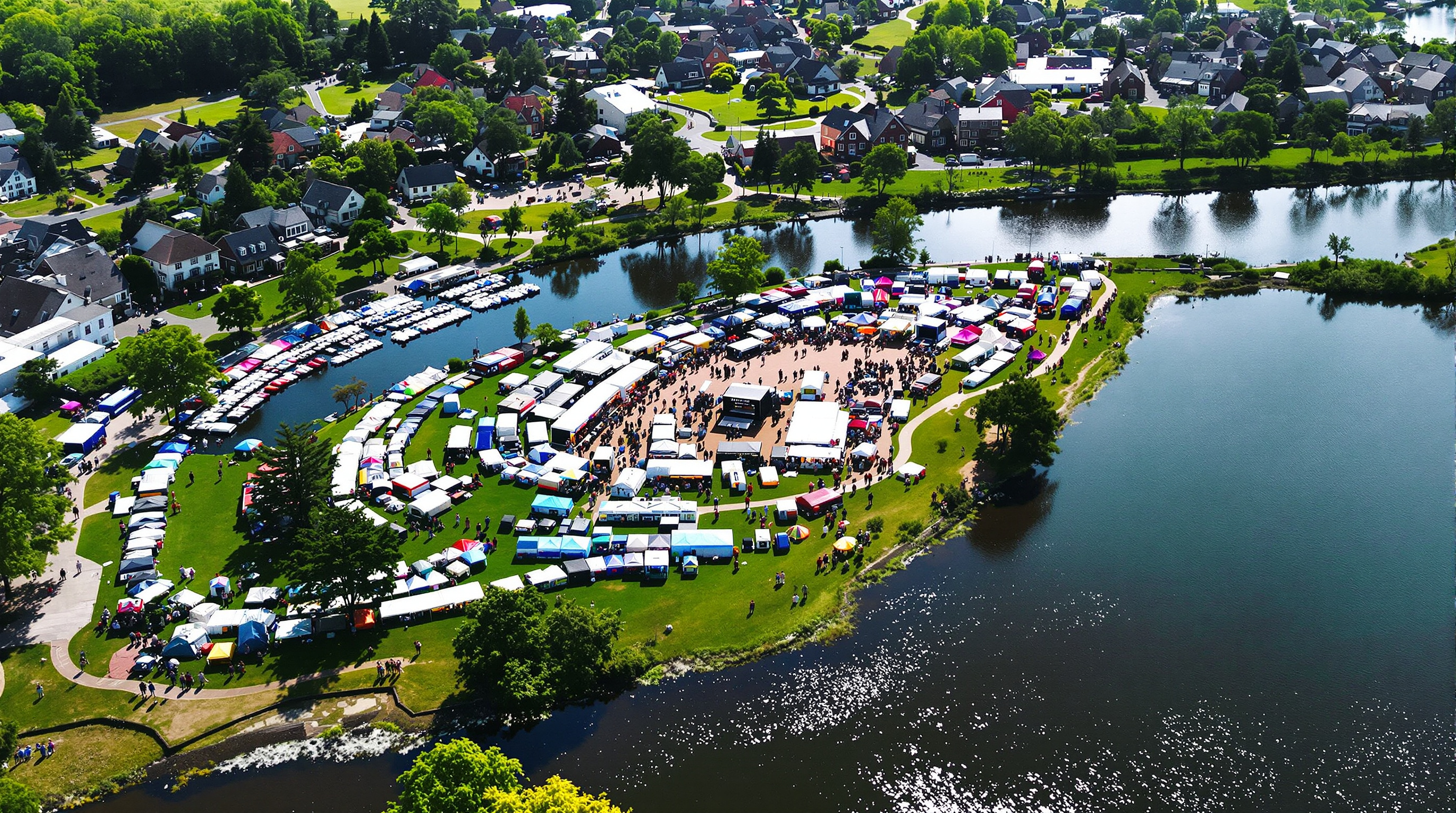
Riverside Park and Frog Island invite a closer look at the riverfront as a place of paths, park entrances and community history. Understanding the City's repairs and proposals helps separate the features already worked on from changes that remain part of a project plan.
For a walk around these parks, it helps to think in terms of individual entrances and connections. A stairway repair, a boat launch improvement and parking lot paving address different parts of a visit. Choose an entry that suits the people in your group, and consider the return journey as carefully as the way into the park.
The City of Ypsilanti's project list describes work in both parks under construction year 2026. It distinguishes repaired stairways and structures from planned work at the Frog Island boat launch and parking lot. That distinction matters when reading about access: a completed repair to one feature does not establish the condition of every nearby path or entrance.
In Riverside Park, the City reports that a flight of stairs to the Tridge from Cross Street was replaced. It also lists repair work on the Tridge, Gazebo and dock. These are specific pieces of the park's infrastructure, and the project description is useful for identifying what received attention.
At Frog Island, the concrete stairs at the north end were repaired and improved. The wooden stairs into the park from the parking lot on the east side were replaced. This gives visitors two distinct stairway locations to keep in mind when considering park entrances.
If your route includes a stroller or mobility aid, consider each level change. A repaired stairway does not establish a step-free entrance. Choose an approach that suits the group, and plan how to return from the park.
The City's 2026 list describes work to improve accessibility at the north-end boat launch. The scope includes brush and tree clearing, stormwater grading, planting new trees and using stormwater seed mixes. The description connects access work with changes to the surrounding ground and planting, so the project is broader than simply resurfacing a place to enter the water.
Parking lot repaving is described in stages: the north side first, followed by the south side. The City says trail access will remain open with intermittent closures as needed. That wording allows for interruptions, so leave room to change a walking route if a work area blocks the intended approach.
Keep parking access, trail access and boat launch access as separate questions when making plans. A statement about one does not answer all three. Allow time to follow any posted directions, and choose a different route if the entrance you intended to use is unavailable.
At the south end of Riverside Park, the City is working with the Mutual Aid Network of Ypsilanti, the Huron River Watershed Council and Washtenaw County Water Resources on a wet meadow pilot. The City describes wet meadows as a native plant community that helps manage stormwater. This project gives the planting itself a role in caring for the park's water, alongside the work on stairs, structures and paving.
The listing concerns an installation at a particular end of the park; it does not identify plant species. For a casual visit, the useful points are the location, the partners involved and the stated stormwater purpose.
Look at planting areas with that purpose in mind, and give any marked work area space. Families can use the project as a prompt for questions about where rainwater goes and how planted ground differs from paved ground. These are ways to explore the idea without needing to identify individual plants or enter the meadow.
The City's Freighthouse description places the building next to Frog Island Park on the north side of Depot Town. It says the Freighthouse has been used as a community center, hosting the Depot Town Farmers Market, a cafe and community meetings and events. It is part of the Ypsilanti Historic District and is listed in the National Register of Historic Sites.
The City's project list also reports that the City and the DDA worked together on repaving the Freighthouse parking lot in Depot Town, with pavement work completed.
The building connects a park walk with an interest in local heritage. Historic status and community use can be considered together: one concerns recognition of the place, while the other concerns the gatherings it has accommodated. The uses described by the City offer context for looking at the building; plan a particular market or event from its own details.
The City lists several future projects affecting the river corridor. Peninsular Dam removal is listed for 2027. Replacement of the Cross Street Bridge superstructure is listed for 2027-2028, followed by the Prospect Road Bridge superstructure in 2028-2029. The Michigan Avenue Bridge replacement, identified with MDOT, is listed for 2030-2031.
Read these as the years in the City's future-project list. They help distinguish longer-term river work from the stairway repairs described above, but they do not supply a day-by-day construction schedule, a detour map or a promise that an approach will be open on a particular visit. The project names and year ranges are the useful reference points.
Another item concerns the connection for cyclists: the City is studying whether Lowell and Huron, between Forest and Leforge, can change from a one-way pair to two-way traffic and include a shared-use path across a gap in the Border to Border Trail. Because this is a feasibility study, the path should be understood as a possibility being considered.
Plan around the routes available for your trip. The maps and directions page also introduces public transit for the Ann Arbor-Ypsilanti area, including mobile ticketing. Leave room in the day's plans to adapt the journey.